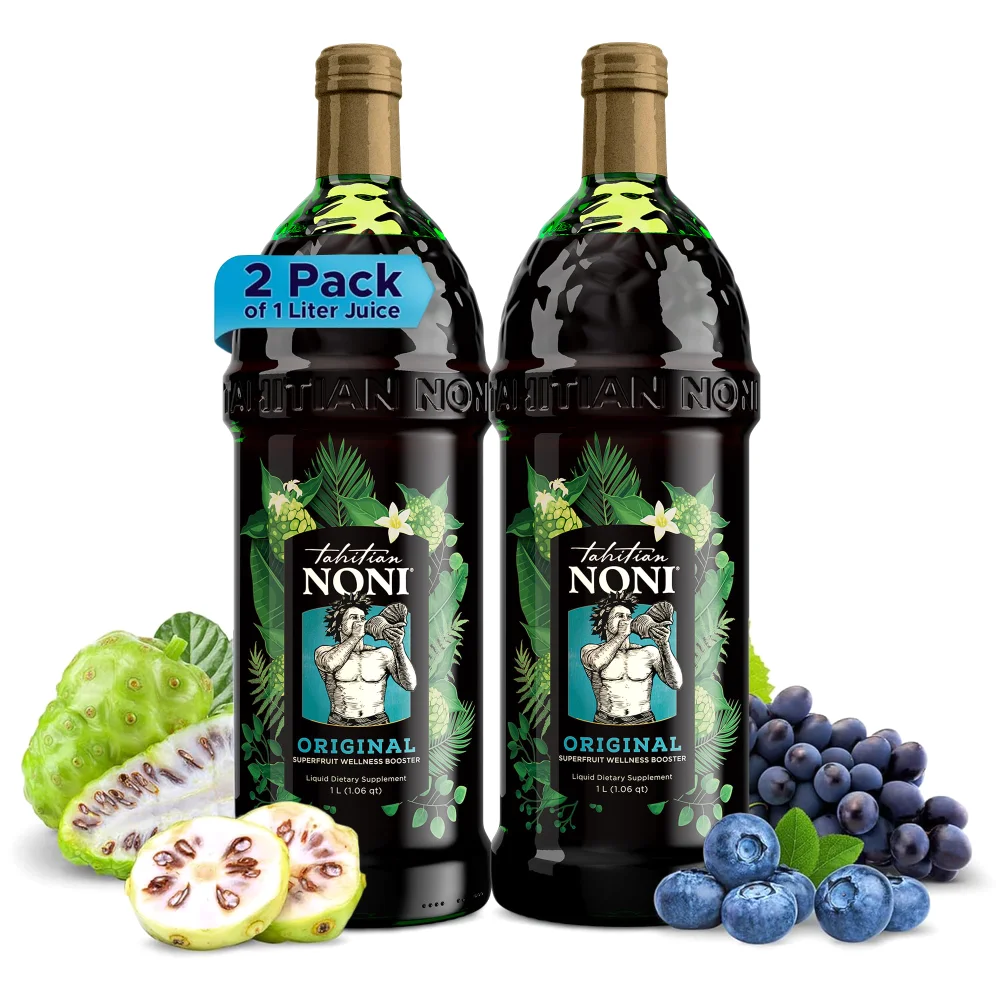
Tahitian Noni. One litre, thirty-three servings, the whole panel in print.
A litre of this juice costs between $45.49 and $74.74 depending on how many you take. Before you decide, read what is in a serving: 15 calories, 3 grams of carbohydrate, 2 of them sugar, 15 milligrams of iridoids and phenolic compounds. Noni purée from French Polynesia, blueberry, grape.
Take the four-bottle case and a serving costs $1.38. Take the single litre and it costs $2.15. That is the whole decision, and every number behind it is on this page.
33servings in a litre bottle, at the 30 ml the label calls a serving
$1.38per serving on the four-bottle case, our cheapest way to drink it
1996the year the first bottle went out
1996the year the first bottle was filled
7,426ratings behind the bottles we sell
4.6their average, out of five
$45.49the cheapest litre in Tahitian Noni cases
01The range
Three sizes of the same bottle
A litre is $70.94, two litres $112.94, four litres $181.94. Nothing else changes between them.
Every bottle in the Tahitian Noni range holds the same juice, so choosing is arithmetic rather than taste. Start on a single litre if noni is new to you: it lasts a month at a serving a day, and if the flavour turns out not to be yours, you are out one bottle instead of four. Come back for the case when you already know. Four litres cost $181.94, which works out at $45.49 a litre and $1.38 a serving — a saving of $101.82 against buying the same four litres one bottle at a time.
Four litresCheapest litre
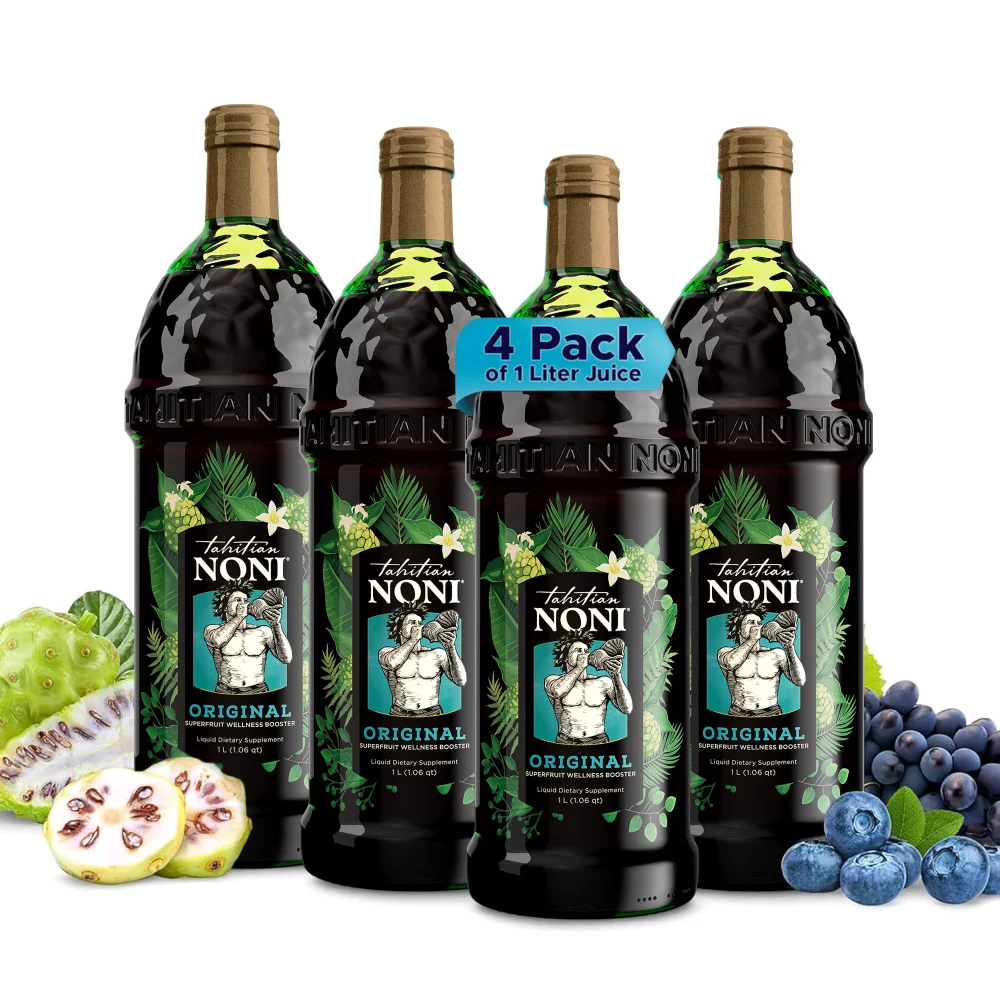
Four-bottle case
4 × 1 litre of dark glass
132 servings at the 30 ml on the label
$1.38 a serving
The same pack is also stocked under a second entry. If one runs dry, the other holds the identical bottles. $181.94, 841 ratings at 4.8.
★★★★★ 4.6 out of 5 · 5,963 ratings
$181.94$45.49 a litre
Two litres
Two-bottle case
2 × 1 litre of dark glass
66 servings at the 30 ml on the label
$1.71 a serving
★★★★★ 4.6 out of 5 · 5,963 ratings
$112.94$56.47 a litre
The litre
One litre
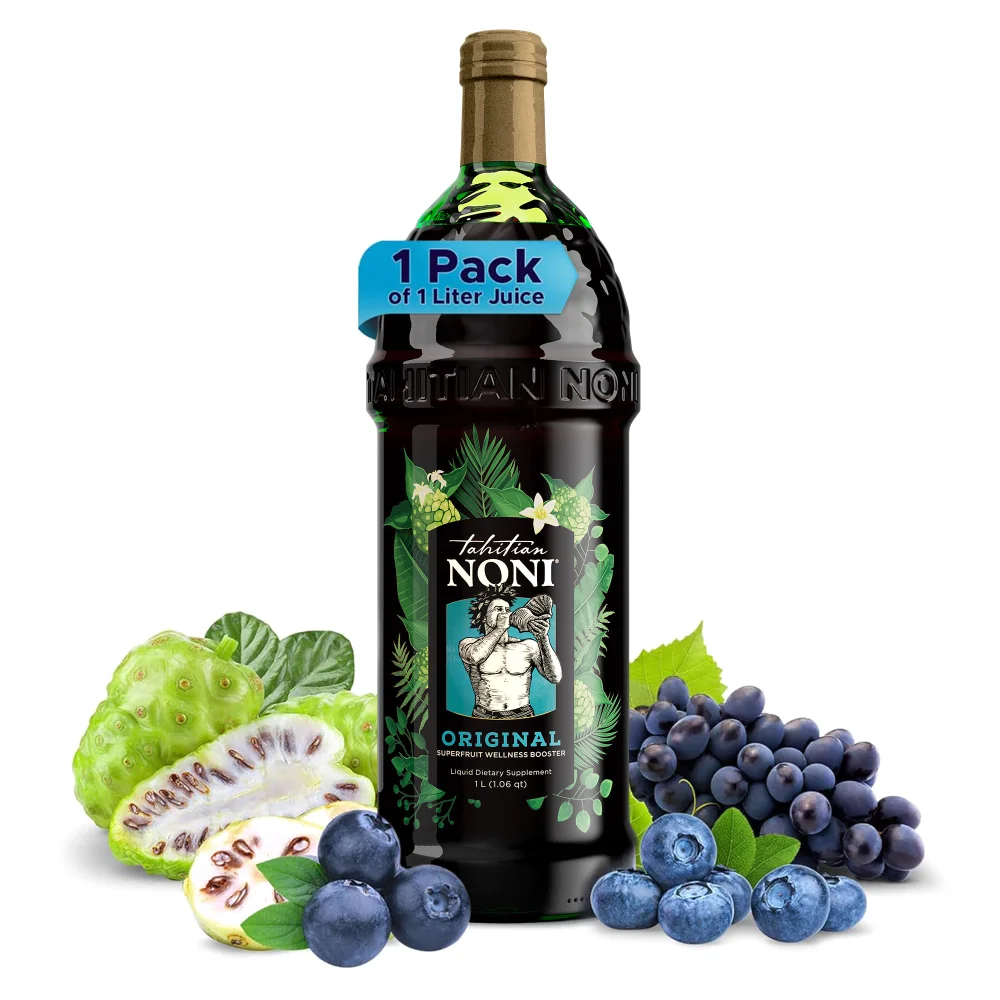
1 × 1 litre of dark glass
33 servings at the 30 ml on the label
$2.15 a serving
The same pack is also stocked under a second entry. If one runs dry, the other holds the identical bottles. $74.74, 622 ratings at 4.6.
★★★★★ 4.6 out of 5 · 5,963 ratings
$70.94$70.94 a litre
What a litre costs, by pack
Bars are drawn to the price per litre. Shorter is cheaper.
Four litres · $181.94$45.49 a litre · $1.38 a serving
Two litres · $112.94$56.47 a litre · $1.71 a serving
The litre · $70.94$70.94 a litre · $2.15 a serving
Prices are the figures from our last update. The date of that update sits on our updates page, and the checkout is the authority if the two ever disagree. How we keep the figures current.
02What is in it
The panel, copied out figure for figure
You should not have to zoom into a photograph of a label to find out what you are drinking.
Every Tahitian Noni bottle carries a supplement facts panel, and this is that panel, typed out. A serving is one fluid ounce, 30 millilitres or about two tablespoons, and a litre bottle holds about thirty-three of them. Pour it and you are drinking 15 calories, 3 grams of carbohydrate and 2 grams of sugar. The sugar comes from the fruit; nothing is added.
The line that matters most to anyone who has read about noni is the fourth one: 15 milligrams of iridoids and phenolic compounds per serving. Iridoids are the compound family noni is studied for. No daily value has been set for them by anyone. The panel prints a dagger instead of a percentage, and we print the dagger too.
Serving size 1 fl oz (30 ml). About 33 servings in a one litre bottle.
Per serving (1 fl oz (30 ml))
Per 60 ml
Calories
15
30
Total carbohydrate
3 g
6 g
Sugars
2 g
4 g
Iridoids / phenolic compounds
15 mg
30 mg
Proprietary blend
29 g
58 g
Percent Daily Values are based on a 2,000 calorie diet. Daily Value not established for the iridoid and phenolic figure.
The proprietary blend, in the order the label gives
Morinda citrifolia (noni) fruit nectar from purée, from French Polynesia
Vaccinium corymbosum (blueberry) juice concentrate
A proprietary blend means the total weight is declared and the split between the parts is not. That is legal, common and less than you deserve, so here is what the label does say: the blend weighs 29 grams a serving, the noni comes from French Polynesia as fruit nectar from purée, and the second named part is blueberry juice concentrate.
Other ingredients
Vitis vinifera (grape) juice concentrate
Natural flavors
Four names, one of them a flavour. If you have been reading noni labels for a while you will notice what is missing: no water listed first, no cane sugar, no preservative, no colour.
03The bottle
What arrives, and what the fruit looks like
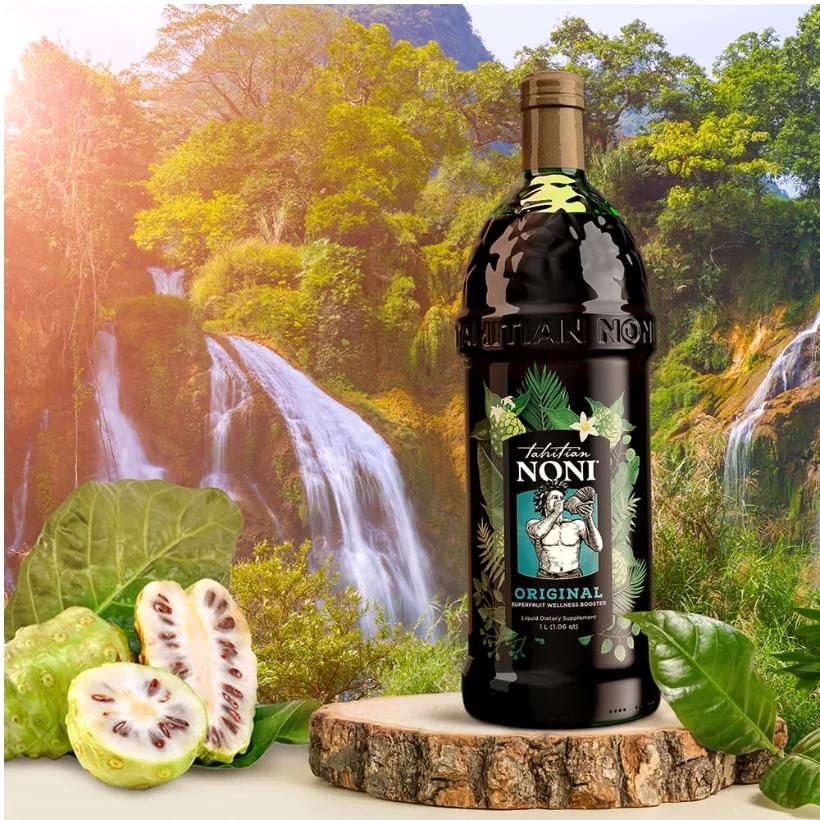
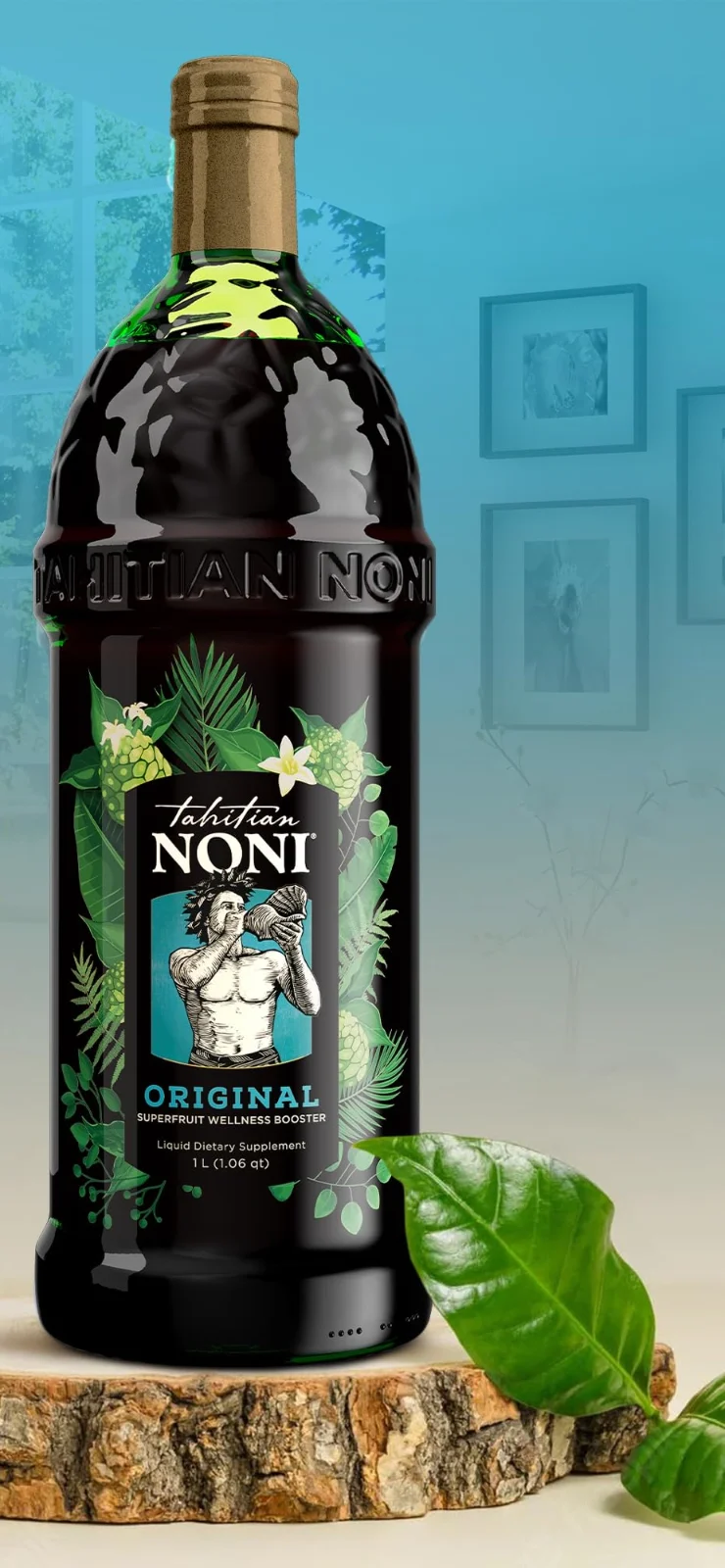
One Tahitian Noni litre of dark glass with a gold cap, and the knobbly green fruit it is pressed from.
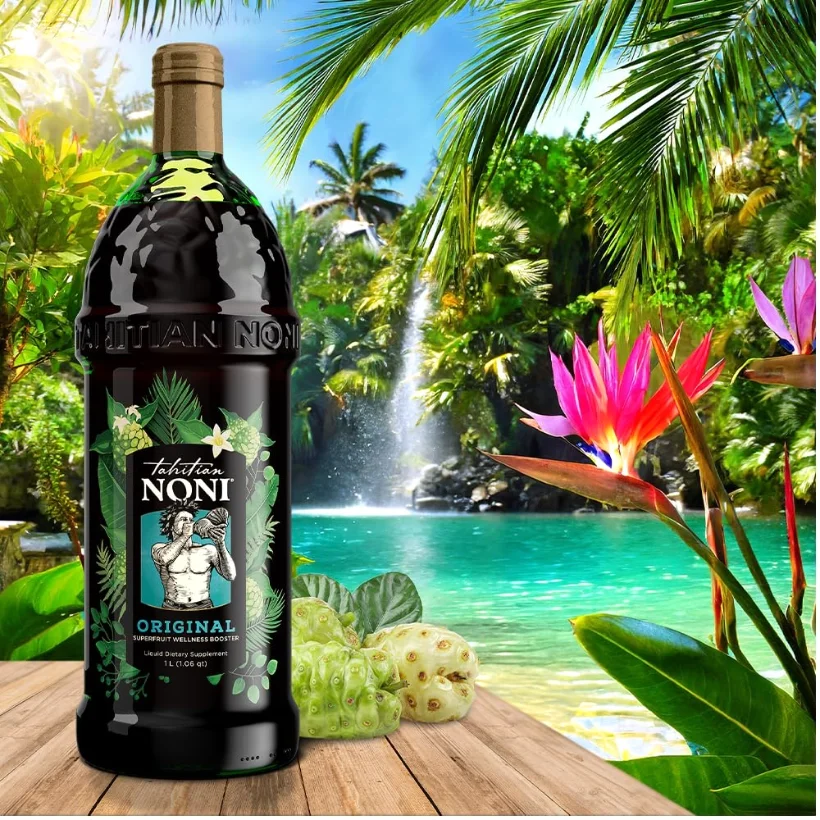
A bottle on a deck rail above the lagoon. The fruit in the frame is noni: green, knobbly, about the size of a small potato.
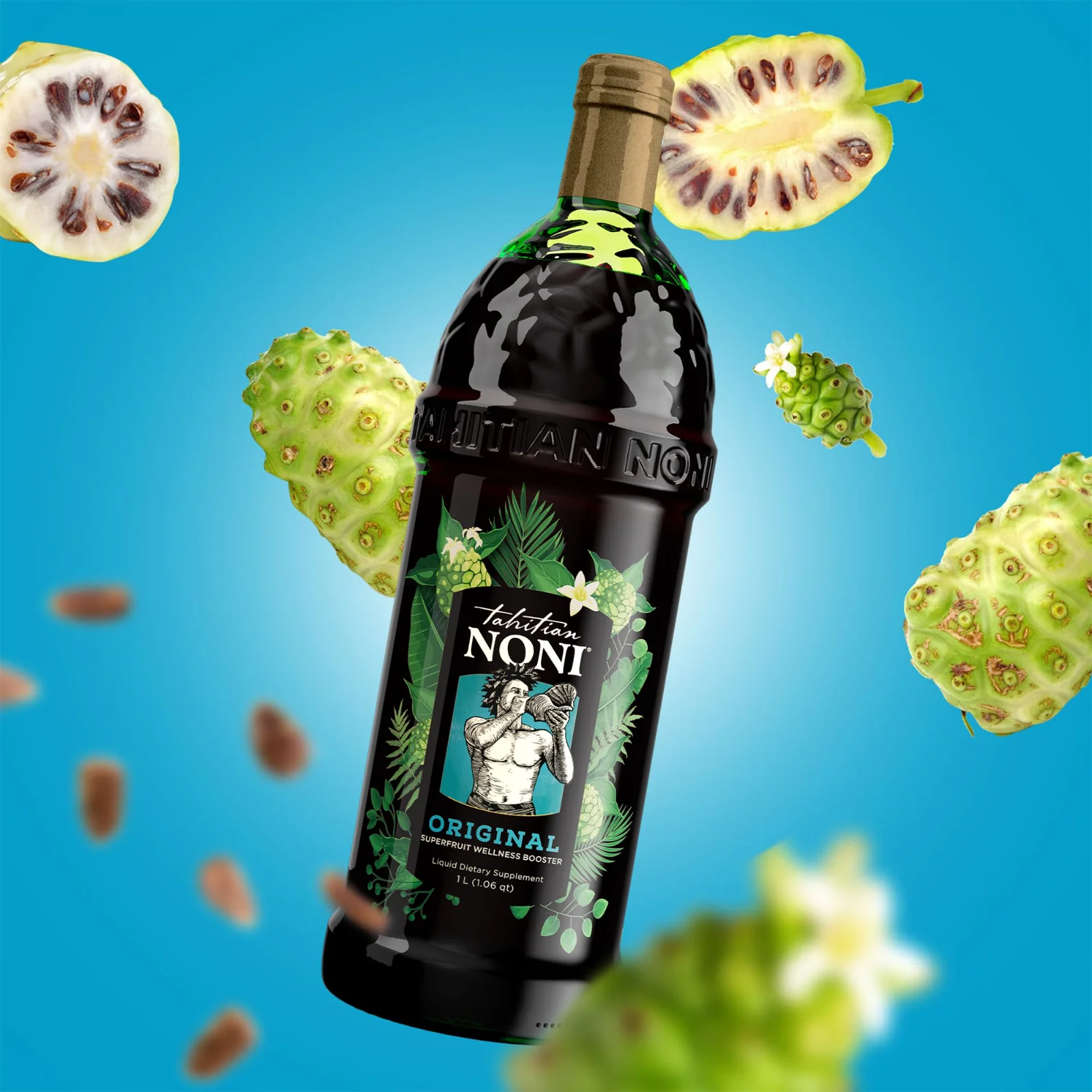
The same litre beside a cut noni fruit, showing the pale flesh and the dark seeds inside it.
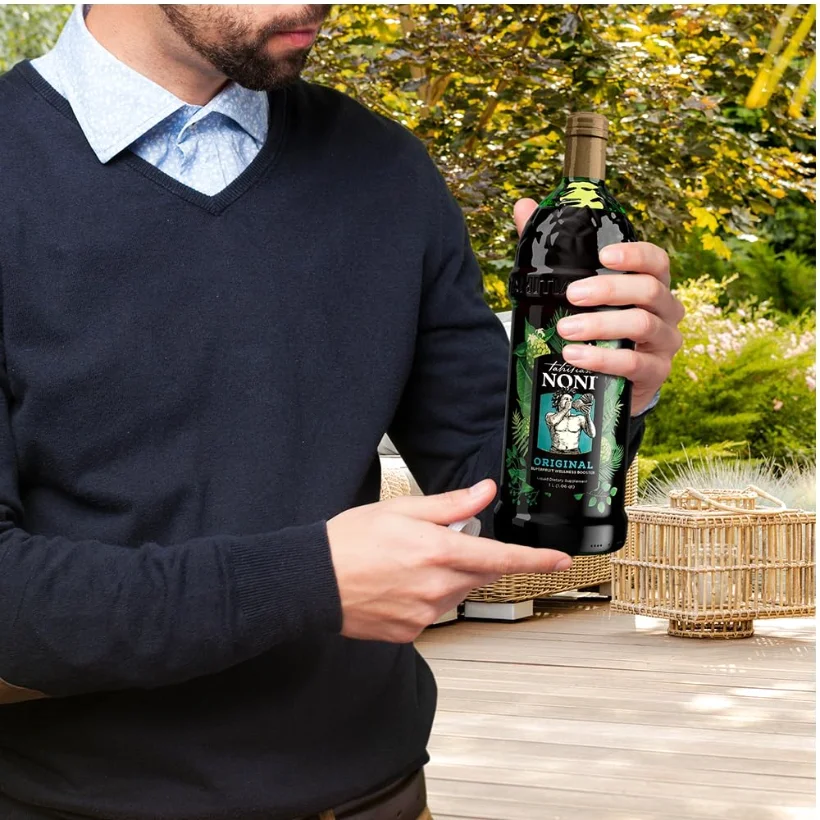
Held in one hand, label out. The bottle is 1 litre and heavier than it looks in a photograph.
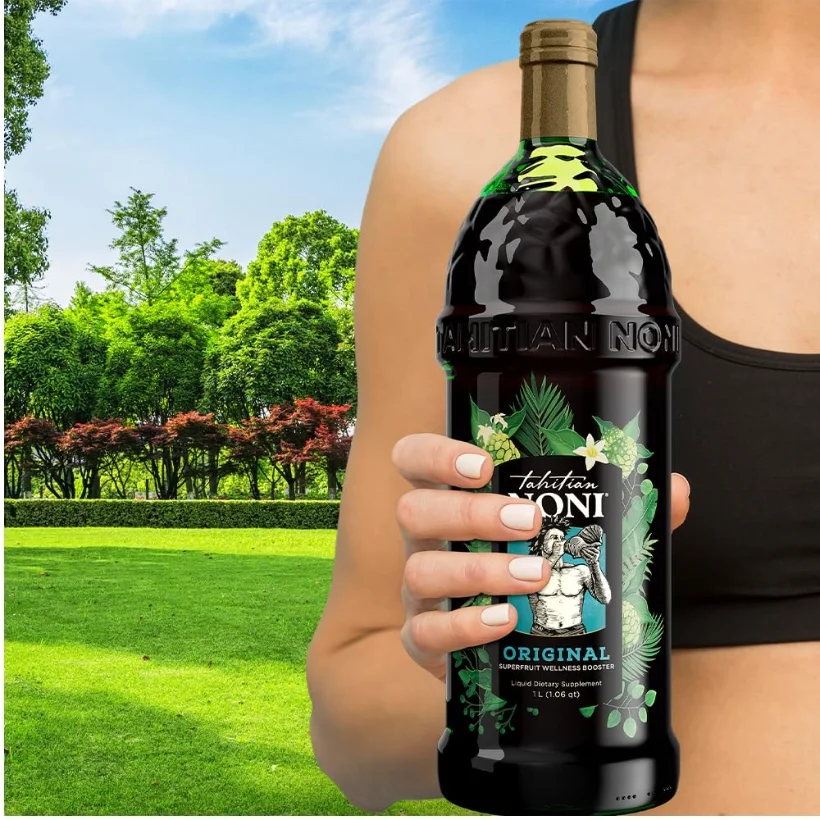
The label at reading distance: this is the face you are looking for on a shelf.
Four frames: the bottle above a lagoon, the litre beside cut noni fruit, a hand holding it, the label at reading distance. Five more the brand published have a sentence printed into the picture, and those five are not here.
04From the tree to the cap
How a litre of Tahitian Noni comes together
Fruit for juice comes off the tree hard and pale green, then sits until it turns translucent and collapses. That is where the juice starts, and the six steps below are the rest of the way to the Tahitian Noni bottle in your fridge.
Step 1
Picked
The tree is a small evergreen of the Pacific islands, and it fruits all year rather than in one season. The fruit is picked hard and green-white, about the size of a small potato, with the skin still tight.
Step 2
Ripened
Left to soften, noni turns translucent and gives off a smell nobody has ever called pleasant. That stage is not a fault in the fruit; it is the stage the juice comes from.
Step 3
Pressed
The softened fruit is pressed and strained to a purée. What leaves this step is not yet a drink: it is thick, grey-brown and far too strong to pour into a glass.
Step 4
Blended
Blueberry juice concentrate and grape juice concentrate go in. They are not there to bulk the bottle out. They are there because unblended noni is a hard thing to swallow, and the label names both.
Step 5
Bottled
One litre at a time, into dark glass. The colour of the bottle is not styling: light is what fades a fruit juice fastest, and a clear bottle on a shop shelf under strip lighting is a slow-motion accident.
Step 6
Dated
Cap, label, batch. From here the bottle travels, and the only figure we can still promise you is the one on the panel.
The bottle, the fruit and the places the fruit comes from. No sound needed.
Cut from the frames on this page. Nothing in it is a claim about what the juice does.
06Against the shelf
Where our price actually sits
We are not the cheapest noni juice you can buy, and a table that pretended otherwise would fall apart the moment you opened another tab.
To put a real number on it we priced every noni juice we could find sold by the bottle, worked each one back to a price per litre, and lined them up. Forty bottles from sixteen brands, read on the same day. The cheapest works out at $29.06 a litre. The dearest asks $190.18. The middle of that field sits at $38.51.
Our four-bottle case lands at $45.49 a litre: above the middle, below the top quarter. The single litre at $70.94 sits high in the field, which is the honest cost of buying one bottle instead of four rather than a different juice.
Forty noni bottles from 16 other brands, priced on one day and worked back to a price per litre.
Tahitian Noni four-bottle case
The other forty bottles
Price per litre
$45.49
$29.06 to $190.18, middle of the field $38.51
Cheaper per litre than us
·
29 of 40
Dearer per litre than us
·
11 of 40
Price per 30 ml serving
$1.38
not printed by most of them
Bottle of a litre or more
every one
21 of 40
Origin named on the label
French Polynesia
named by some, not by others
Bottles only: capsules, powders and extracts were left out, because a price per litre means nothing once the fruit has been dried.
What the extra buys is not a secret and not a claim. It is a purée from French Polynesia rather than a reconstituted concentrate, two named fruit juices rather than water and flavour, and a bottle that has been filled the same way since 1996.
07Certification
What we can show you, and what nobody can
Every noni bottle on the internet seems to carry a seal. Here is the plain state of ours.
We can show you
Assessed in Europe
The Tahitian Noni purée and concentrate went through a European safety assessment as a novel food ingredient, adopted by the EFSA panel on 13 March 2009. That opinion names this purée rather than noni in general, and it is linked at the foot of this page.
Nobody can show you
Not approved by the FDA, and no supplement is
The Food and Drug Administration is not authorised to review a dietary supplement for safety or effectiveness before it goes on sale. So no bottle of noni anywhere carries FDA approval, ours included, and any seal suggesting otherwise on any brand is decoration.
We can show you
A full supplement facts panel
Serving size, servings per container, calories, carbohydrate, sugars, the iridoid figure and the named ingredients. It is printed on the bottle and typed out on this page so you can read it before you buy rather than after.
08The brand
Thirty years of the same bottle
Where the fruit grows, why one litre of it costs $70.94, what the panel commits to, and the two documents that sit badly together: a National Institutes of Health page saying noni has shown no benefit in studies of people, and a European assessment that found no harm to the liver.
In July 1996 a company was set up in Utah around a fruit that almost nobody in the United States had heard of, and before that year was out the first litres of Tahitian Noni juice were leaving the door. Thirty years on, the bottle looks much as it did: dark glass, gold cap, one litre, a label with a figure on it holding a fruit. What is inside has kept its shape too. In a category where formulas get reworked every second season, that is odd enough to be worth an explanation.
The fruit came first, and it is not a pleasant one
Morinda citrifolia is a small evergreen that grows across the Pacific islands, Southeast Asia, Australia and India. It fruits all year rather than in a season, so noni fed people through lean months long before anyone bottled it: there was always some on the tree. The fruit runs about the size of a small potato, pale green turning white, with a knobbly surface that looks assembled out of other fruit. Ripe, it goes translucent and smells like a cheese that has given up. Nobody in the islands ate it for the taste. They ate it because it was there.
So the history of this drink is really the history of one problem: how do you get that fruit into a glass a person will finish? The answer arrived at in 1996, and unchanged since, is purée and two fruit juices. Not water. Not cane sugar. Blueberry juice concentrate and grape juice concentrate, both named on the panel, both in the bottle because unblended noni empties a room.
Noni fruit beside the bottle it ends up in. The pale, knobbly one on the left is the fruit; it grows on the tree all year round.
What the label commits to
Here is the panel from the bottle, typed out. You are looking at one fluid ounce, 30 millilitres or roughly two tablespoons, which is what the label calls a serving, and at the 60 millilitres many people pour in practice.
Supplement facts, one litre bottle, about 33 servings per bottle.
Per serving of 30 ml
Amount
Per 60 ml
Calories
15
30
Total carbohydrate
3 g
6 g
Sugars
2 g
4 g
Iridoids and phenolic compounds
15 mg
30 mg
Proprietary blend
29 g
58 g
The blend is noni fruit nectar from purée, from French Polynesia, and blueberry juice concentrate. Grape juice concentrate and natural flavors are listed separately as other ingredients.
That table is the whole nutritional argument, and its smallness is the point. Fifteen calories. Three grams of carbohydrate, two of them sugar, and the sugar comes from the fruit. Then the line people actually came for: 15 milligrams of iridoids and phenolic compounds, the compound family noni gets studied for. It carries a dagger rather than a percentage because no daily value for it has ever been set, by anyone, anywhere. We print the dagger too.
The part nobody selling noni wants to print
Search for this fruit and you will hit a wall of promises, most of them written by people with a bottle to move. So here are two documents that sit awkwardly beside each other, and you should read both.
Noni has not been shown to have beneficial effects on any health condition in studies of people.
National Center for Complementary and Integrative Health, National Institutes of Health, February 2025
The same page records several reports of liver toxicity in people who drank noni juice or noni tea for weeks at a time, and adds that it is unclear whether noni caused them. That is the National Institutes of Health, and we link it at the foot of every page rather than hoping you never find it.
Now the other side. In 2006 the European Food Safety Authority went back over those hepatitis case reports and found no convincing evidence of a causal relationship, concluding that at the intakes observed noni juice was unlikely to harm the liver. Three years later its panel assessed Tahitian Noni fruit purée and concentrate as a novel food ingredient in Europe, an opinion that names this purée rather than noni in general.
Put plainly: nobody has shown this juice does anything to a health condition, and nobody has shown it does harm at ordinary intakes. Anything a brand adds to those two sentences is invention. We would rather sell you a fruit juice you understand.
The short version
It is a fruit juice. It tastes strong. The panel is on the bottle and on this page. If you are pregnant, breastfeeding, on medication, or living with kidney or liver disease, ask your own doctor before adding it. Not because of anything special about noni, but because that is what you should do with anything new.
Why the bottle is dark, and why it is glass
Hold the bottle up to a window and you get nothing back: the glass is almost black, and that is the point. Nothing with no preservative in it survives a shop shelf under strip lighting in clear glass. The litre is a considered size too. A household pouring 30 millilitres a day empties it in about a month, which is roughly how long an opened fruit juice has before the fruit inside starts turning.
One litre, held. It is heavier than it photographs, and the cap is a screw cap rather than a cork. This is a bottle meant to be opened and closed thirty-three times.
What a litre costs, and why it costs that
We priced every noni juice sold by the bottle that we could find on one day: forty bottles from sixteen other brands, each worked back to a price per litre. The cheapest came out at $29.06 a litre. The dearest asked $190.18. The middle of the field sat at $38.51.
Our four-bottle case works out at $45.49 a litre. Our single litre is $70.94. Both are above the middle, and the single bottle sits high in the field, which is what buying one instead of four costs anywhere. We would rather say that than dress it up: the case is $181.94 for four litres, and buying those same four litres one at a time would cost $283.76.
What the difference buys is not a secret and not a claim. Purée from French Polynesia instead of a concentrate reconstituted with water. Two named fruit juices instead of water and flavouring. A litre of glass instead of 33.8 fluid ounces of plastic. Whether that is worth twelve dollars a litre over the middle of the field is your call, and you can only make it with the numbers in front of you. So here they are.
Thirty years, in other people's words
Behind the bottles we sell sit 7,426 ratings, averaging 4.6 out of five. Read enough of them and a pattern shows up that has nothing to do with marketing. People who have been drinking it since 2008 and 2011 and say so in passing. People who find it bitter and cut it with water or juice, and say that too. People whose bottle arrived broken in the post. Somebody in Australia who likes it and wishes it were cheaper.
That last one is the review we think about most. She is right that it is not cheap. The best we can do about it is show her exactly what she is paying for, print the panel, divide the price by the litre, and link the documents that argue with each other about what noni does. Everything else is somebody else's sales pitch.
Everything above is on the label, on a receipt, or in a document we have linked. If you want the range itself, the Tahitian Noni line is at the top of this page.
09What buyers wrote
Nine reviews, including the ones that sting
Real reviews of Tahitian Noni bottles, written by people who paid for them. We quote what they wrote about the juice, the taste, the price and the packing.
★★★★☆August 21, 2026
I’ve been drinking Tahitian Noni juice for a few weeks and really like it. The taste is unique (a bit earthy/fruity) but easy to get used to when mixed with water or juice. […] Quality product from Morinda – will keep buying.
M isabel soria velarde · One litre
★★★★★August 18, 2026
[…] The taste is bitter. But 1 teaspoon in juice water etc and its all good.
AC crown · One litre
★★★★★May 4, 2026
Looks and tastes just like the original!! Delivery was just right!
Sandy Tye · Four-bottle case
★★★★★May 10, 2026
Quality product, extremely well packed, fast delivery.
mmh · One litre
★★★★★July 9, 2026
The Best band for Noni Juice! The One! My family has been drinking it for almost 10 years.
HUANXIN XU · Four-bottle case
★★★★★May 6, 2025
Absolutely love this and have been using it from 2011 on and off.
Ms. C. M. Tempeanu · Two-bottle case
★★★★★September 2, 2025
Awesome but need to make it a bit cheaper....
Lily · One litre
★☆☆☆☆June 24, 2020
We have recieved good in broken status ( one out of two bottle) was broken.
ritesh · Two-bottle case
★★☆☆☆May 1, 2026
Not good very bad no good results just washed of money I will never buy again never ever again
Muniba · Four-bottle case
Reviews claiming this juice treated or cured something are not quoted here, however many stars they carry. That is an editorial line, not an accident, and it is written down on our editorial policy page. Our editorial policy.
10Reading
Three long pieces on noni
Nine minutes on what the research says. Eight on how a litre is made. Eight on taste, servings and what one glass costs.
The National Institutes of Health say noni has not been shown to help any health condition in people. European regulators say it is unlikely to harm the liver at ordinary intakes. Both sentences are true, and here is what sits between them.
A tree that fruits all year, fruit picked hard and ripened until it collapses, a purée nobody could drink, and the two named juices that turn it into something you finish. Six steps, and what each one protects.
Tart, earthy, fermented underneath, and thirty-three servings to the litre. What a glass costs in each pack size, how long a bottle really lasts, and what buyers mix it with when the taste is more than they expected.
8 minute read
Before you drink it
This is a fruit juice and a food, and nothing on this site is medical advice. Noni has not been shown in studies of people to have beneficial effects on any health condition, and we make no claim that it does. Reports of liver problems in people drinking noni over several weeks exist and are linked below along with the European assessment that found no causal link; both are worth your time. If you are pregnant, breastfeeding, taking medicines, or living with kidney or liver disease, ask your own doctor or pharmacist before adding this or anything else to what you drink.
What we read, and when
Noni: Usefulness and SafetyNational Center for Complementary and Integrative Health, National Institutes of Health · February 2025 · read 2026-08-28The plainest statement we found on what the evidence does and does not show: noni "has not been shown to have beneficial effects on any health condition in studies of people". The same page records several reports of liver toxicity in people who drank noni juice or tea for weeks at a time, and notes it is unclear whether noni caused them.
EFSA re-assesses safety of noni juiceEuropean Food Safety Authority · 6 September 2006 · read 2026-08-28The other half of the liver question. After case reports of acute hepatitis, EFSA's panel found "no convincing evidence for a causal relationship" between those cases and noni juice, and concluded it is unlikely that drinking it at the observed levels of intake harms the liver.
Opinion on the safety of Tahitian Noni® "Morinda citrifolia (noni) fruit puree and concentrate" as a novel food ingredientEFSA Panel on Dietetic Products, Nutrition and Allergies · adopted 13 March 2009, published 3 April 2009 · read 2026-08-28The one regulatory document that names this purée specifically rather than noni in general: a European safety assessment of Tahitian Noni fruit purée and concentrate as a novel food ingredient.
Using Dietary Supplements WiselyNational Center for Complementary and Integrative Health, National Institutes of Health · January 2019 · read 2026-08-28Why the label on this bottle carries no approval stamp and never could: "The FDA is not authorized to review dietary supplements for safety and effectiveness before they are marketed." The same page is where the advice to talk to your own clinician before adding anything comes from.
Take the case, or take one bottle
One Tahitian Noni litre is thirty-three servings and a month of mornings. Four litres is $45.49 a litre and the cheapest way we sell it. Whichever you choose, the price you pay is the one at the checkout, and the panel does not change between them.
 Four litresCheapest litre