Tahitian Noni · Journal · A month of mornings: taste, servings and cost per glass
A month of mornings: taste, servings and the cost of one glass
Tart, earthy, fermented underneath, and thirty-three servings to the litre. What a glass costs in each pack size, how long a bottle really lasts, and what buyers mix it with when the taste is more than they expected.
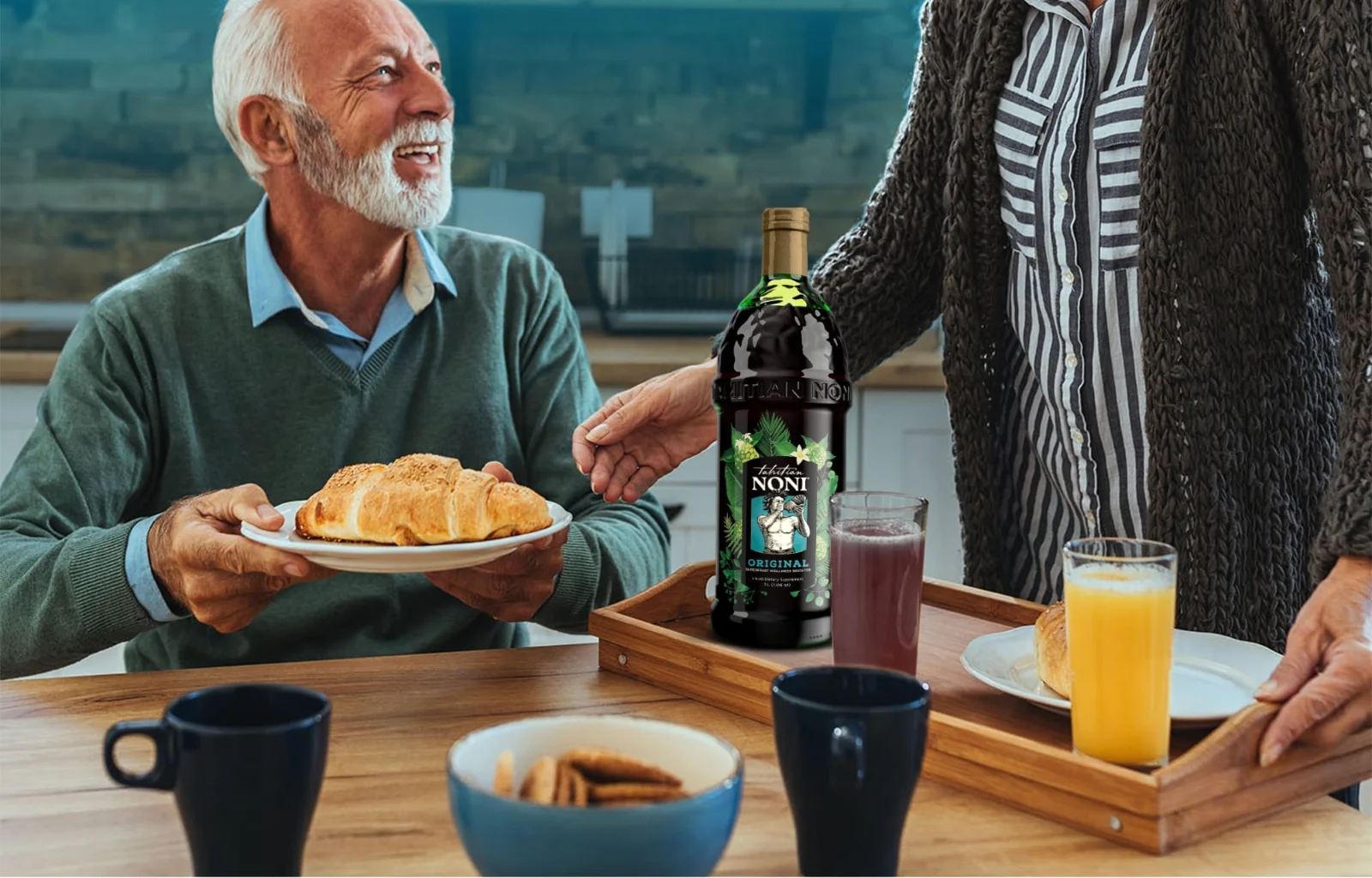
Somebody bought a litre, drank the first serving, and put the bottle down with an expression. That happens often enough with noni that it is worth writing the whole thing down before you order: what it tastes like, how far a bottle goes, what a glass costs you, and what people do when the taste is more than they bargained for.
What it tastes like
Tart first, then earthy, with a fermented edge underneath that does not belong to any other juice you have had. The blueberry and grape in the blend land at the front and round the finish; the noni sits in the middle and is the part people remember. One of our reviewers calls it earthy and fruity at once, and says it took a few days to get used to. Another calls it bitter and cuts it with water. Both are describing the same bottle accurately.
It is not sweet. The panel says 2 grams of sugar in a 30 millilitre serving, and your tongue will confirm it. If you have arrived here from a shelf of tropical juices that taste like sweets, adjust your expectations before the first pour rather than after.
Cold helps. A serving straight from the fridge reads much rounder than one at room temperature, and the difference is larger than it is with most drinks.
How much is a serving, and how far does a litre go
The label calls a serving one fluid ounce, 30 millilitres or near enough two tablespoons, and says a litre bottle holds about thirty-three of them. That is smaller than most people expect. It is not a glass of juice; it is a shot glass, and the bottle is designed around that.
Some drink 60 millilitres, and the panel prints a second column for that: 30 calories, 6 grams of carbohydrate, 30 milligrams of iridoids and phenolic compounds. At that rate a litre lasts about sixteen days rather than thirty-three.
| You pour | A litre lasts | A two-bottle case lasts | A four-bottle case lasts |
|---|---|---|---|
| 30 ml once a day | 33 days | 66 days | 132 days |
| 60 ml once a day | 16 days | 33 days | 66 days |
| 30 ml twice a day | 16 days | 33 days | 66 days |
Serving counts follow the label, which says about 33 servings of 30 ml per litre bottle.
What a glass costs
One sum ought to decide your pack size, and it is simpler than the shelf makes it look. Take the price, divide by the number of servings, and stop reading anything else.
| Pack | Price | Servings | Per serving | Per litre |
|---|---|---|---|---|
| One litre | $70.94 | 33 | $2.15 | $70.94 |
| Two-bottle case | $112.94 | 66 | $1.71 | $56.47 |
| Four-bottle case | $181.94 | 132 | $1.38 | $45.49 |
Figures from our last update. The date of that update is on our updates page, and the checkout is the authority if the two disagree.
Read the last column and the whole shape of the decision appears. Buying four litres one bottle at a time costs $283.76. Buying the four-bottle case costs $181.94. The case saves $101.82, which is more than the price of a single bottle, and it is the single largest saving available anywhere on this site.
The counter-argument is real and worth stating: four litres is four months of mornings, and if you have never tasted noni you may not want four months of it. That is the whole reason we still sell the single litre at a price we know is high.
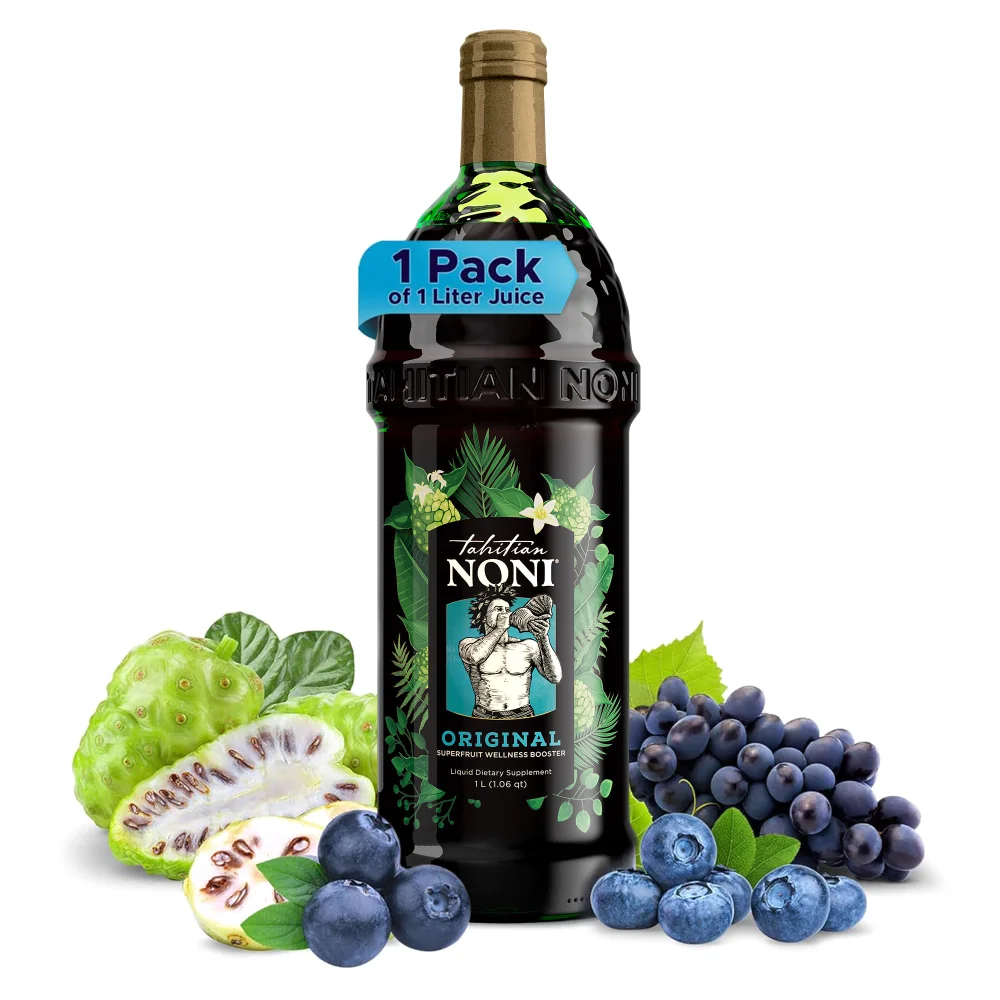
One litre
Thirty-three servings, one month, and no commitment past that.
The things people mix it with
The bottle suggests shaking well and serving it on its own, chilled, or mixing it with fruit juice, sparkling water, cucumber or fresh fruit, or blending it into a smoothie or tea. Our buyers have their own list, and it is shorter and more practical.
- Water, cold, in a ratio somewhere near one part juice to three parts water. This is what most people who find it bitter end up doing.
- A tablespoon into a glass of apple or orange juice, which hides the fermented note almost completely.
- Sparkling water over ice, which turns the tartness into something closer to a shrub or a bitter soda.
- Into a smoothie with banana. The banana does the work the sugar is not doing.
- Straight, cold, first thing. The people who have been drinking it for a decade almost all do this and cannot understand the fuss.
One practical note that has nothing to do with taste: shake the bottle. It is a purée-based juice and it settles, and the difference between a shaken pour and an unshaken one is noticeable.
Storage after opening
Once the seal is broken, the fridge and the cap are the whole strategy. There is no preservative in the bottle, and a litre of opened fruit juice standing on a warm counter is a science experiment. Screw it shut, keep it cold, and pour from the fridge.
The dark glass earns its keep here as well as on the shop shelf. Fridge light is not much, but a month of it is a month.
Working out whether it is worth it to you
Here is the honest frame for the decision, and it has nothing to do with health, because the research does not support anyone who says otherwise.
At $1.38 a serving on the four-bottle case you are paying about what a coffee shop charges for a small filter coffee, once a day, for four months. At $2.15 on the single litre you are paying about what the same shop charges for something with milk in it. Those are the comparisons to hold in mind. Supermarket orange juice is a different purchase and tells you nothing.
Whether a tart fruit juice from French Polynesia earns that place in your morning is not a question we can answer for you. What we can do is make sure the number is in front of you before you decide, rather than after the fourth bottle.
Before your first bottle
Buy the single litre, not the case. Drink it cold. Start at 30 millilitres, not 60. Shake it. Give it a week before you decide, because almost everybody who ends up liking it says the first two days were the hard part.
If after a week it is still not for you, you are out one bottle instead of four, and that was the point of selling it by the litre in the first place.
What thirty millilitres looks like
Nobody keeps a measuring jug by the fridge, so here is the serving in things you already own. Thirty millilitres is two tablespoons. It is a standard shot glass filled to the brim. It is a third of a small espresso cup. In a normal tumbler it looks like a mistake: a dark puddle at the bottom that you will be tempted to top up.
Resist that for the first week. The bottle is built around thirty-three of these, and a household that pours by eye rather than by spoon gets through a litre in twelve days and then wonders why the case did not last.
If you want it to feel like a drink rather than a dose, dilute rather than increase. Thirty millilitres in a full glass of cold water is still one serving, still 15 calories, and still thirty-three of them to the bottle.
The first week, honestly
Day one is the shock. The fermented note arrives after the tartness rather than with it, and almost everybody pulls a face. Day two is the same face, slightly smaller. By day four most people have stopped noticing the finish and started noticing the fruit at the front, and by the end of the first week the drink has usually become unremarkable, in the way a strong coffee becomes unremarkable.
The people this does not happen to are real too, and they show up in our reviews saying so. If you are still bracing yourself on day ten, that is your answer, and it cost you a third of a bottle to find out.
If you are buying it for somebody else
Noni turns up as a gift more often than most juices, usually from someone who has drunk it for years to someone who has never heard of it. Two pieces of advice, both learned from reviews rather than invented.
Send the single litre, not the case. A four-bottle box of a strong-tasting juice is a heavy thing to give someone who may not like it, and there is no graceful way to give the rest away. And say something about the taste when you hand it over. Every review that begins with disappointment is from someone who opened a bottle expecting tropical fruit punch.
Questions we get asked, answered plainly
Does it have to be refrigerated before opening?
No. Cool and dark is enough while the seal is intact, which is what the dark glass is for. After opening, the fridge.
Is there a best time of day?
People who drink it daily mostly take it in the morning, and the reason they give is habit rather than anything else. A serving is 15 calories, so it fits anywhere.
Can I cook with it?
You can, and the tartness behaves like a sharp fruit vinegar in a dressing. It is an expensive way to dress a salad, and we would rather you drank it.
How do I know I am getting the right bottle?
Dark glass, gold cap, one litre, and a supplement facts panel that names noni fruit nectar from purée from French Polynesia. If the panel is missing, so is the reason to buy it.
Will it stain?
It is a dark purple-brown juice with grape concentrate in it, so treat a spill the way you would treat red wine: cold water, straight away, before it dries. A dishcloth and a countertop are fine. A pale rug is not.
The last word on taste
Almost every complaint we see about this juice is about the flavour, and almost every long-term reviewer says the same thing: the taste stopped mattering somewhere in the second week. One of them has been drinking it since 2008, another since 2011, and neither mentions the flavour at all. They write about running out and reordering. That is what habit looks like from the outside.
Whether it happens to you is the one thing about noni that neither we nor the research can predict. A litre is thirty-three chances to find out, it costs $70.94, and if the answer turns out to be no, you will know inside a fortnight.
Keep reading
Thirty-three servings, one seal, and an answer you can only get by opening the bottle. the Tahitian Noni line starts at a single litre for exactly that reason.